
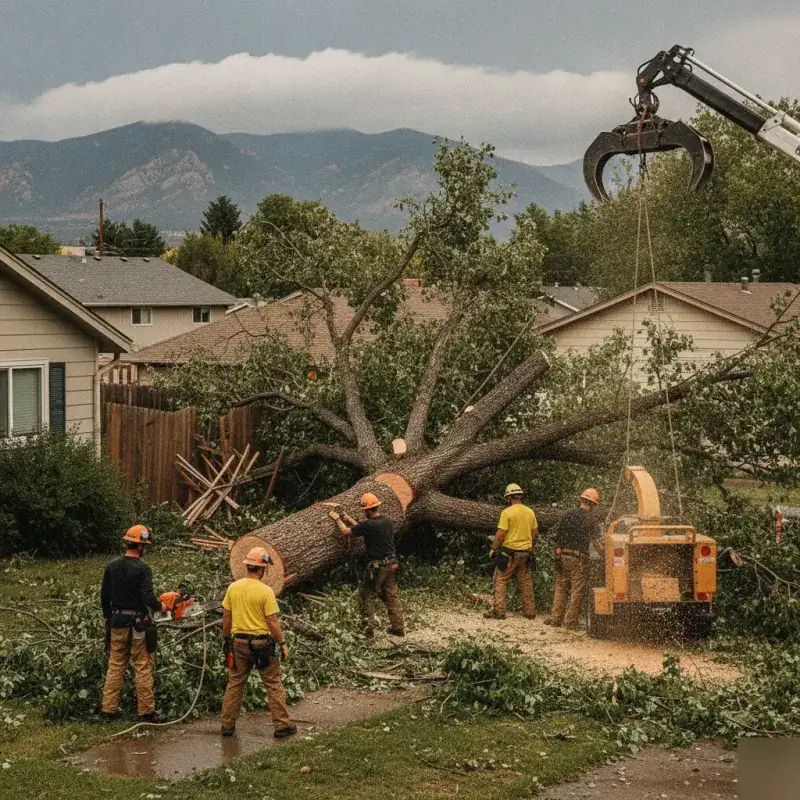
Fallen Tree Removal in Denver Fast Response When Storms Strike
Licensed, fully insured, and serving all of Denver and the surrounding areas.
Signs a Fallen Tree Needs Emergency Removal
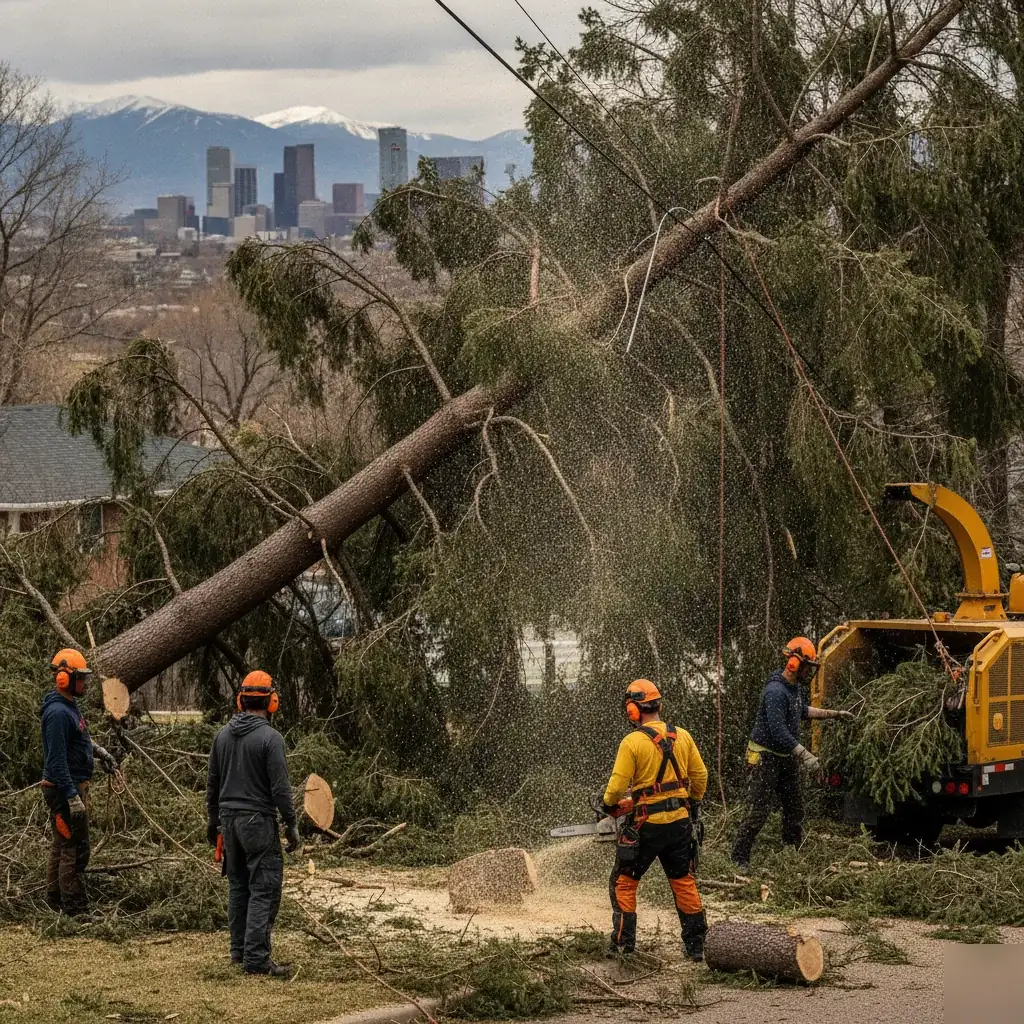
Not every downed tree is an emergency. But some are, and knowing the difference matters. A tree resting flat in your backyard with nothing under it can usually wait until morning. A tree leaning on your roof cannot.
Here's what tells us this is a call-now situation, not a call-tomorrow one:
- The tree is touching or tangled in power lines. Denver's older neighborhoods still run overhead service lines through mature tree canopy, and a downed line means real electrocution risk.
- It's leaning against the house, garage, or fence, even partially. Weight shifts overnight. What looks stable at 6 PM can punch through by midnight.
- It's blocking your only driveway or a shared alley. Not urgent for safety, but urgent for getting anyone in or out.
- Roots are pulled up and the trunk is still swaying in wind. That root ball is basically a hinge, and the tree can move again.
- It came down during or right after a hailstorm or high-wind event, which we see plenty of along the Front Range in late spring and early summer.
We get calls where someone heard a crack at 2 AM, looked out, and saw a limb hanging over their kid's bedroom window. That's an emergency. We also get calls about a tree that's been lying in the side yard for three days, totally settled, nobody in a hurry. That's not.
Ash trees are a specific worry here. Denver has lost a lot of them to emerald ash borer, and a dead or dying ash can fail without warning, no storm required.
If yours is an ash that's already dying, our ash tree removal service is built for exactly that.
If you're standing there staring at a tree and genuinely can't tell which category you're in, that uncertainty itself is a reason to call. Our team offers free in-person estimates with no trip charge, so getting a professional read on it costs you nothing but a phone call.
Tree Responsibility: Private Yards vs. Denver's Right-of-Way Rule
Here's the question we get asked more than almost any other: "Is this my tree?" Fair question. A fallen tree doesn't come with a deed attached, and Denver's mix of older lots and city-planted street trees makes this genuinely confusing for a lot of homeowners.
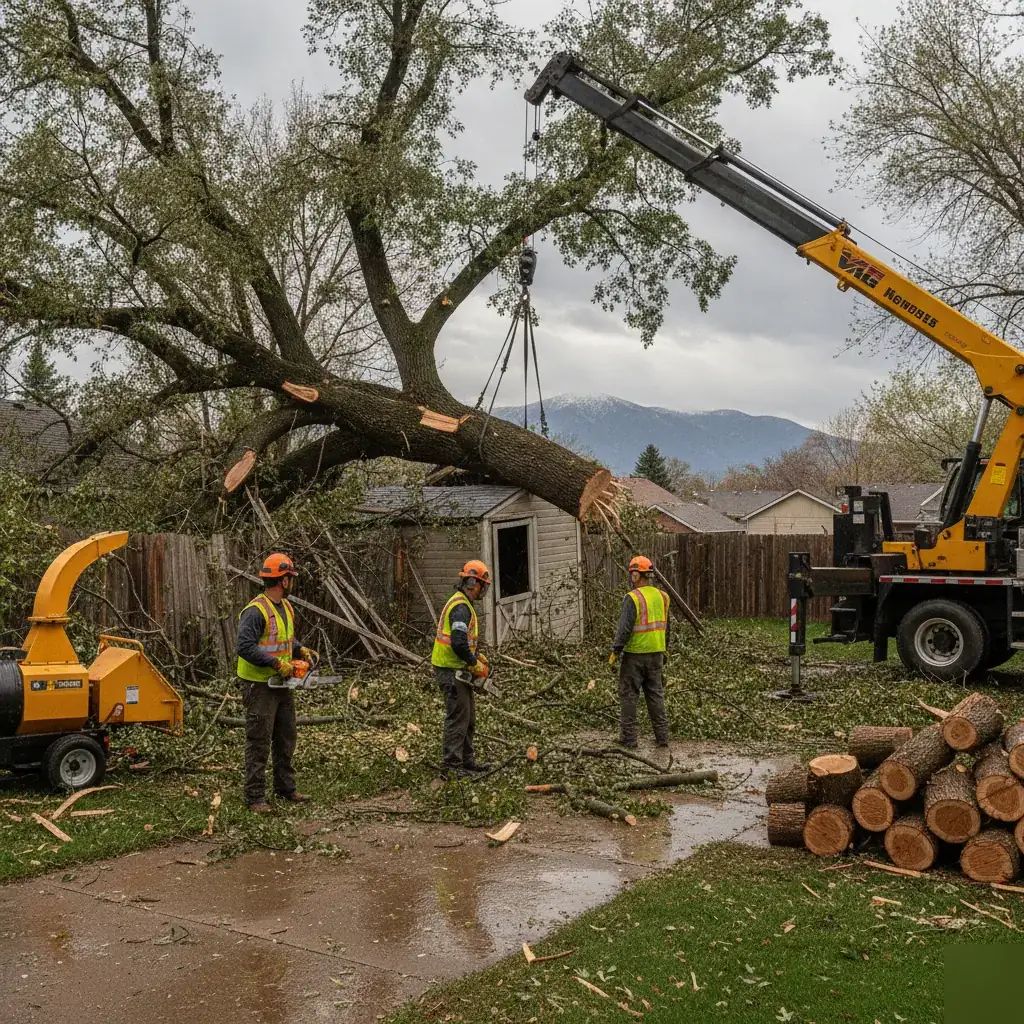
The general rule is simple. If the tree stood on your property, it's your responsibility, roots, trunk, and whatever's left of it after it comes down. That includes trees that fell from your yard onto a neighbor's fence or shed, too. Ownership follows the trunk's original location, not where the debris ends up.
Where it gets murkier is the strip between the sidewalk and the street, the narrow patch of grass you mow but technically don't own outright. Denver treats a lot of those trees as part of the public right-of-way, and the city's forestry program has a hand in managing them. We see this constantly in older neighborhoods like Washington Park and Congress Park, where mature silver maples and cottonwoods were planted decades ago right along that strip. Those trees get big, they get brittle with age, and they're exactly the kind that come down hard in a spring snowstorm.
So what should you do when one's on the ground?
- Tree fell entirely within your yard: it's yours to clear, plain and simple
- Tree fell from the right-of-way strip onto your property: give the city a call first, don't assume
- Tree straddles a property line or the strip: this one needs an actual look, not a guess
When a Fallen Branch Doesn't Need a Removal Crew
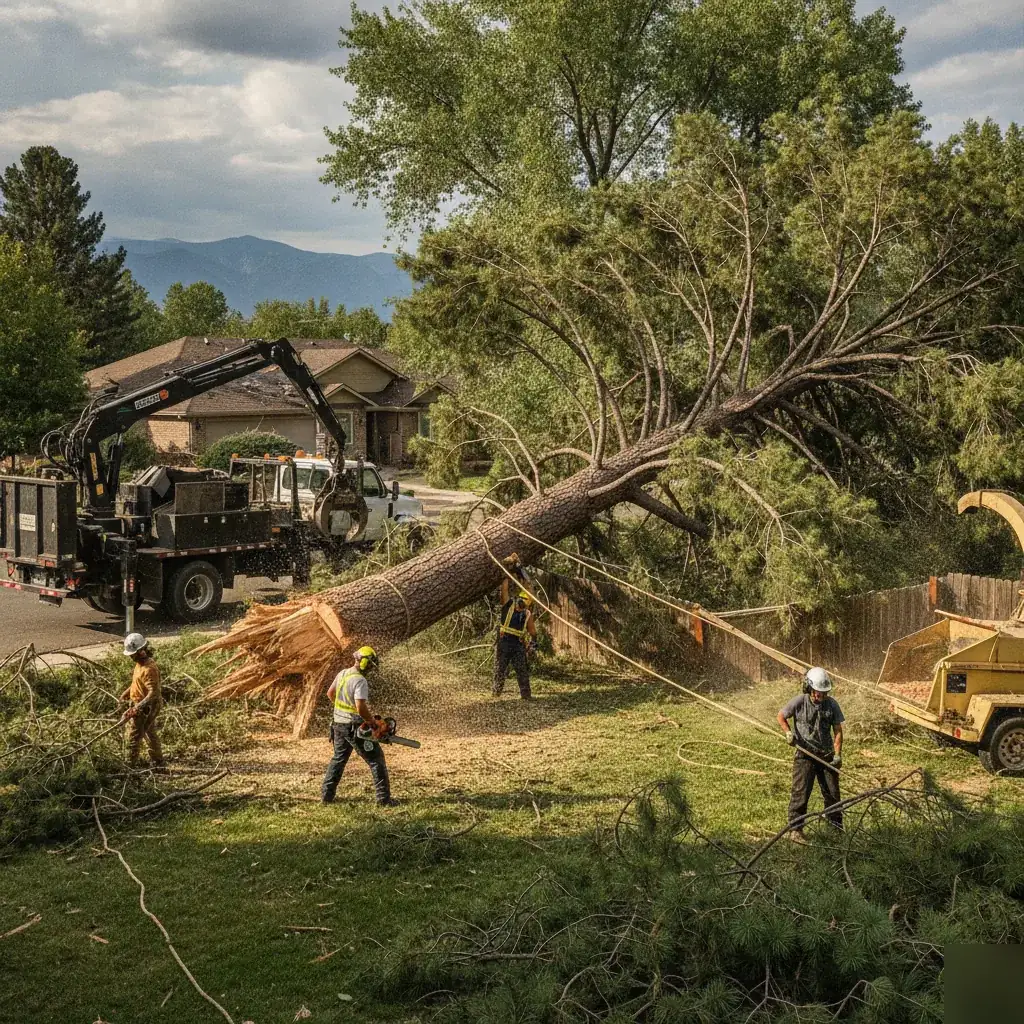
Not every branch on your lawn is an emergency. Most aren't.
If a branch is under four inches thick and it's just sitting on the grass, not hung up in another tree, not resting on a fence or a roofline, you can probably handle that one yourself. Cut it into sections, bag the smaller stuff, and you're done in an hour. We see this every single week after a windstorm rolls through Denver. Homeowners call us worried about a branch that turned out to be a simple weekend cleanup job.
Here's the test we tell people to use. Can you move it without straining? Is it clear of power lines, your roof, and your neighbor's fence? Is the tree it fell from still standing solid, with no cracks or splits near the trunk? If you answered yes to all three, grab some gloves and a hand saw and get after it.
So when does it stop being a DIY job? Once a branch is tangled up in the canopy above it, or it's leaning against your house, or it's thicker than your arm and heavy enough that moving it wrong could pull down more debris, that's a different situation. And if it landed anywhere near a power line, don't touch it. Not worth the risk.
The branches that need a crew are the ones still partly attached, hanging by a strip of bark, swaying every time the wind picks up. Those are dangerous in a way that's easy to underestimate from the ground.
We'd rather tell you to handle the small stuff yourself than send someone out for a job that doesn't need us. That's just being straight with you.
Thinking about fallen tree removal in Denver? Let's talk.
Call (303) 949-6818Call now for a free estimate. Arbor Care Tree Solutions is ready to help.
What Happens During a Fallen Tree Removal Visit
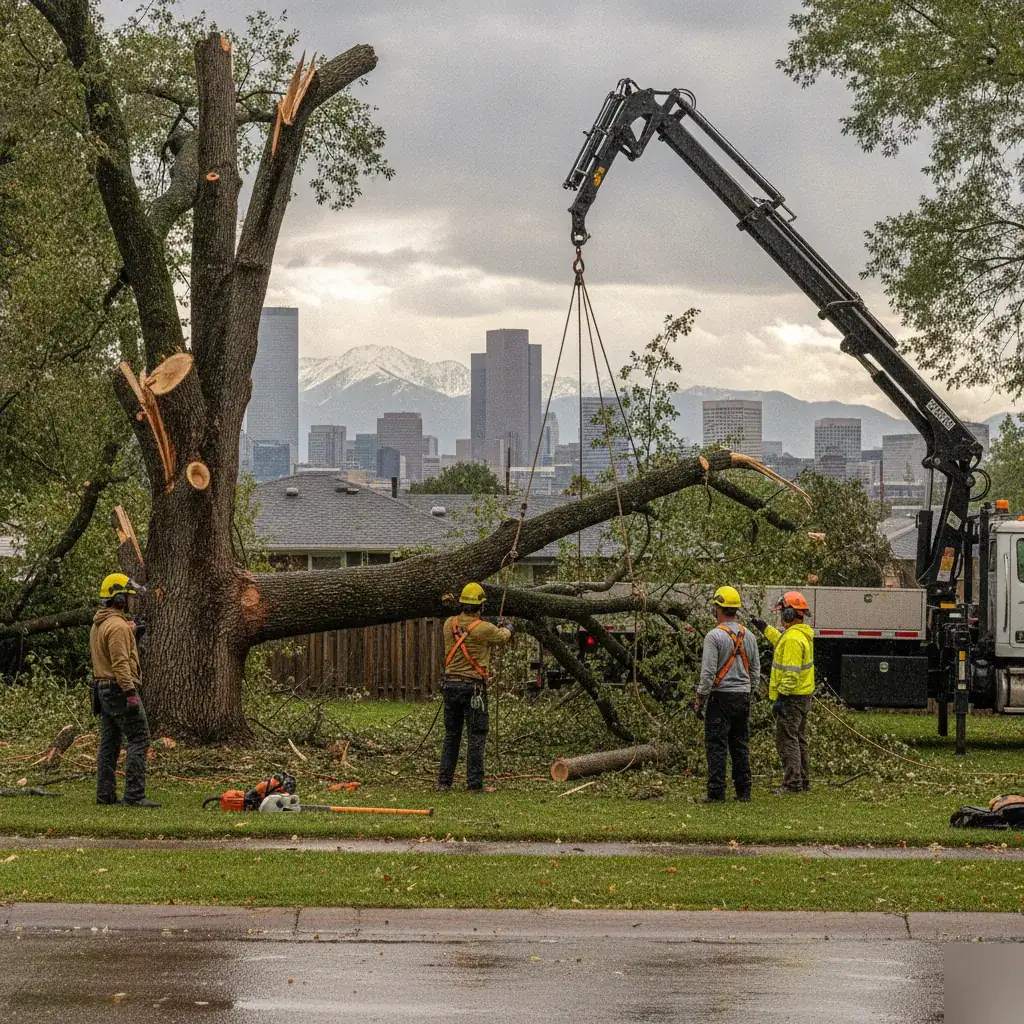
You call, we ask a few quick questions, then we get a truck out to you. Simple as that. No sales pitch on the phone, just enough info to know what crew and equipment to bring.
Here's how the actual visit usually goes:
- We look at the tree first. Is it fully down, or hung up in another tree's canopy? Hung-up trees are trickier and more dangerous, they need a different approach than one that's flat on the ground.
- We check what it's touching. Fence, shed, power line, another tree still standing - each one changes the plan. A trunk resting on a fence isn't the same job as one blocking your driveway after a wind event.
- We section it down. Cutting starts from the top and works back toward the root ball, releasing tension safely instead of guessing where it'll shift.
- We clear debris and haul it out. Logs, limbs, brush, all of it goes. Your yard shouldn't look like a job site when we leave.
- We do a quick walk-through with you. Anything else on the property that looks like a future problem gets pointed out.
Denver's clay-heavy soil doesn't grip roots the way sandier soil does, so downed trees here often pull up a chunk of lawn or sidewalk with them. That changes cleanup, not just the cut.
Some visits take forty minutes. Some take most of the day. Depends on the tree, the access, and what it landed on. We don't rush the assessment part, that's where mistakes happen if you skip it.
How Fallen Tree Removal Pricing Works
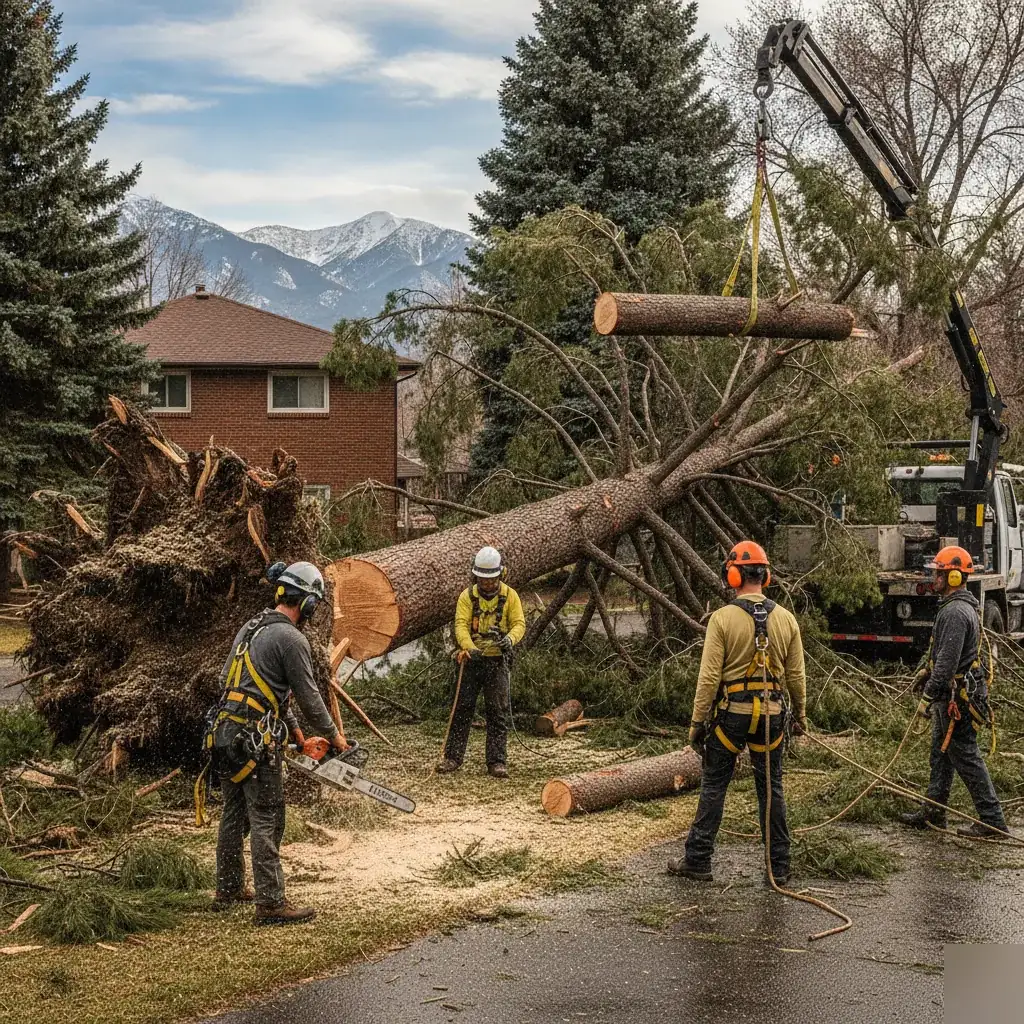
Let's talk cost, because everyone wants to know before they call. Fallen tree removal pricing isn't one flat number. It depends on a handful of real factors, and once you know them, the whole thing makes more sense.
Size and weight matter most. A fallen maple limb blocking a driveway is nothing like a full-grown cottonwood down across a fence line. Access matters too. Can a truck pull right up, or does the tree land in a backyard with no gate wide enough for equipment? We see this every single week here in Denver, where older neighborhoods often have narrow side yards and mature trees planted way too close to the house.
Location on the property changes things, a tree resting against a roof needs careful rigging, one lying flat in an open yard doesn't.
Then there's what's involved in the job. Does the tree need to be cut into sections? Is there a stump left behind that needs grinding? Is there brush and debris to haul off, or just the trunk? Emergency timing plays a role, too. A tree down at 2 a.m. blocking your only exit is a different situation than one that's been sitting in the yard for a week.
Before you hire anyone, ask a few direct questions: Will they give you a written estimate in person, not just a guess over the phone? Is cleanup included, or is that a separate cost? Are they licensed and insured, so you're covered if something goes wrong during removal? These questions tell you more about a company than any price quote ever will.
We offer free in-person estimates with no trip charge, because we think you should see the tree, meet the crew, and know exactly what you're paying for before anything gets cut.
Related Tree Services
Explore the rest of our tree removal services across Denver and the surrounding metro.
Tree Removal
Safe removal of dead, damaged, or unwanted trees, from small ornamentals to large hazards.
Tree Stump Removal
Full root-ball excavation when the stump has to be gone for good.
Tree Stump Grinding
Fast, below-grade grinding to reclaim your yard without the digging.
Emergency Tree Removal
24/7 response when a tree is down and can't wait until morning.
Hazardous Tree Removal
Careful removal of compromised, leaning, or structurally failing trees.
Storm Damage Tree Removal
Priority assessment and cleanup after Front Range windstorms and blizzards.
Ash Tree Removal
Removal of emerald ash borer-infested and dying ash trees.
Ready to Get Started?
Call (303) 949-6818 now for a free estimate. We answer immediately, any time of day.